- 17 ads measured for this guide, shot by shot and word by word
- 7 shots in a typical one, a new shot about every 3.3 seconds
- 73 words spoken in a typical 30-second ad
- 46% of a typical ad has the presenter on camera
What an AI video ad is
Not long ago "AI video" meant a clip of a few seconds with no sound. An AI video ad today is a complete advertisement: someone on screen who speaks your script in sync, shots of the product, words that land on the beat, music, and a cut that holds together for fifteen or thirty seconds. No camera is involved and nobody is filmed.
It helps to keep two things apart. Using AI to help with an ad (to draft a script, to add captions) is common and unremarkable. An AI video ad in the sense of this guide is one where the footage itself is generated. That is the kind that has changed what a small business can make in an afternoon, and it is also the kind the networks ask you to label. Eleven of them, with their prompts, are on our page of AI generated ads.
The four kinds of AI video ad
Almost every AI video ad is one of four kinds, or a mix of them. The first is what people usually mean by AI avatar video ads: a presenter talking to the camera. The other three are where most of the selling gets done.
A presenter who talks and acts
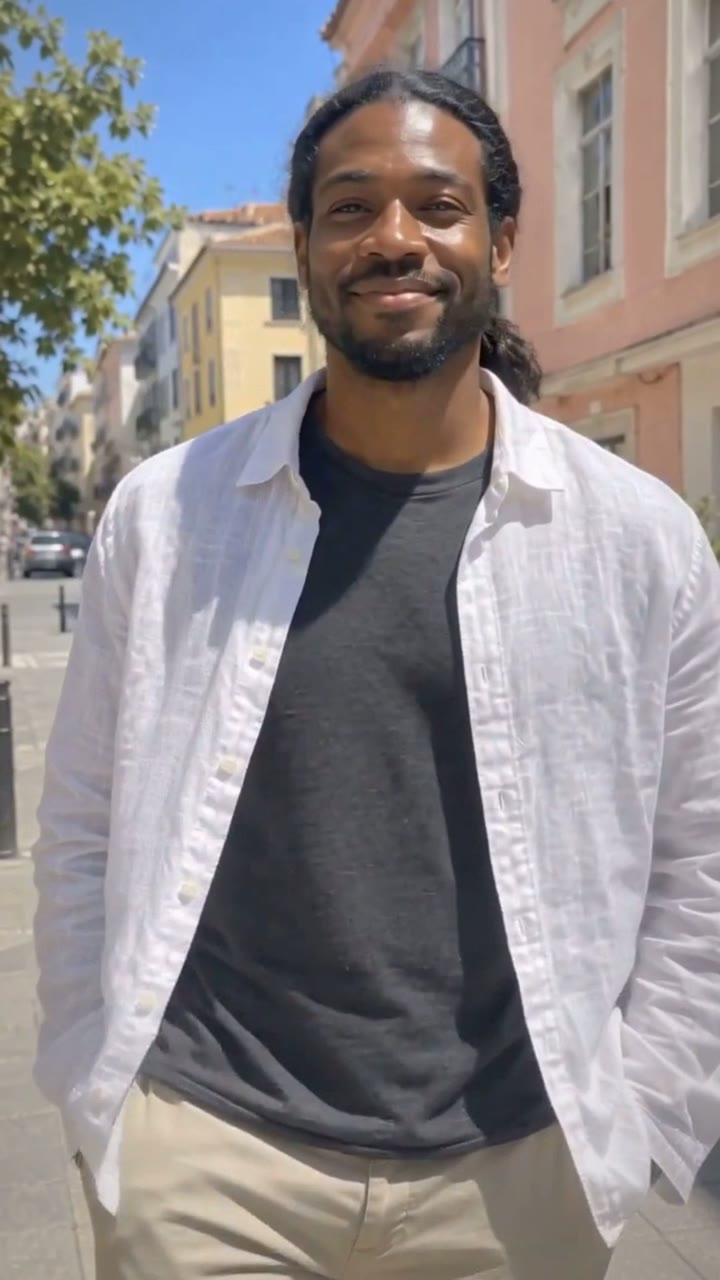
One person, one shirt, three looks: the presenter is the demonstration.
 Made with ReelHatchReelHatch
Fashion · 30s
Noorwen linen shirts
Prompt: A TikTok ad for Noorwen, linen shirts for men, cut loose and washed soft. The presenter, a man around 30 on a sunny street, wears the same white shirt three ways as the cuts change: open over a T-shirt, buttoned with rolled sleeves, tucked in…
The product, leading
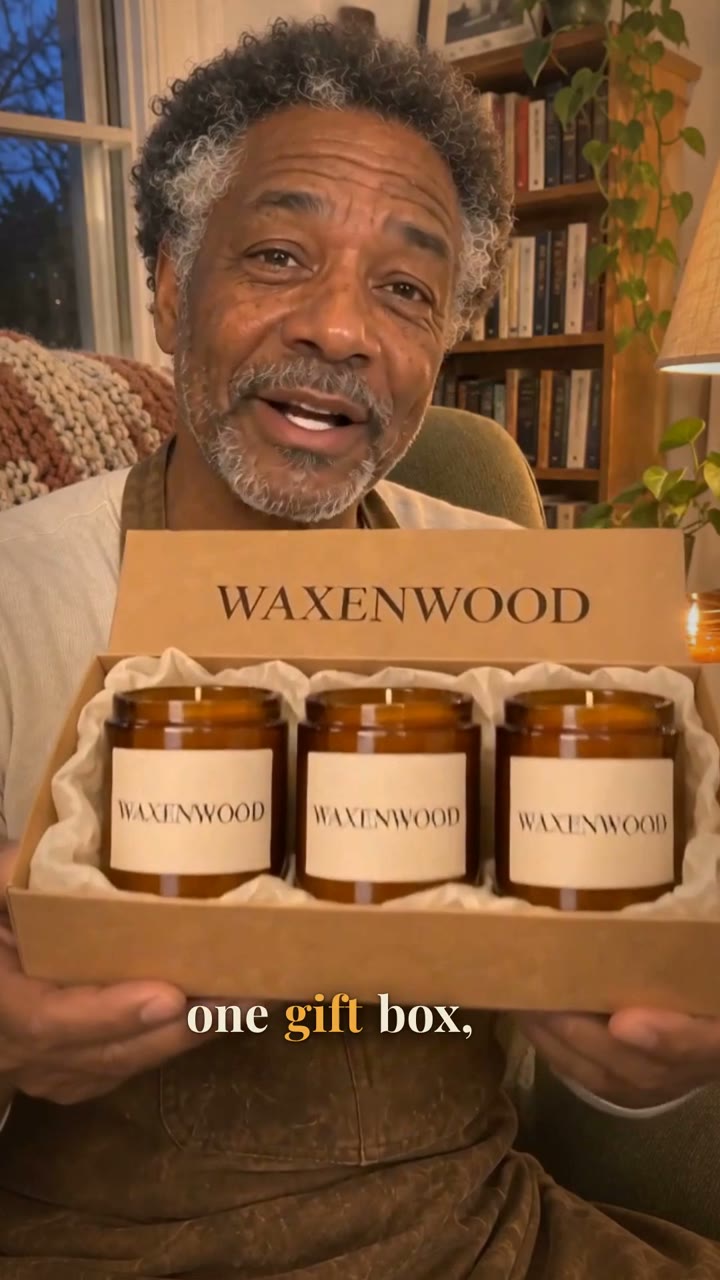
Candles from the brand's own two photos, with the scents named on screen.
 Made with ReelHatchReelHatch
Gifts · 30s
Waxenwood candles
Prompt: A TikTok ad for Waxenwood, hand-poured soy candles in scents named after places, shown in the attached product photos. Frame it as the gift for the person who is hard to buy for. Hook: "Stuck on a gift for someone who has everything?" The presenter,…
An app on the screen
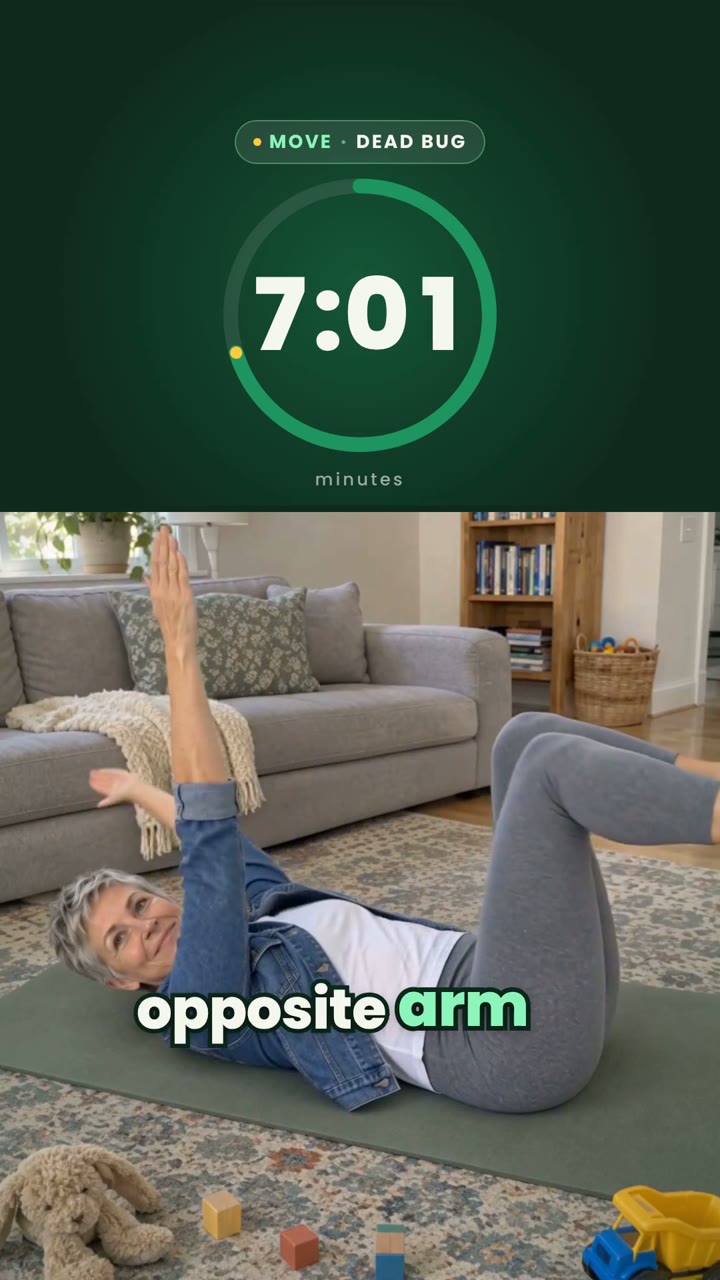
A workout shown on a living-room floor, then the plan inside the app.
 Made with ReelHatchReelHatch
Fitness program · 30s
Core10 Daily program
Prompt: An ad for Core10 Daily, a 10-minute core workout program for busy parents. Hook: "No gym, no excuses - just 10 minutes." The presenter, a host in a living room with toys on the floor, names the usual objection (no time) and answers it: a…
No presenter at all
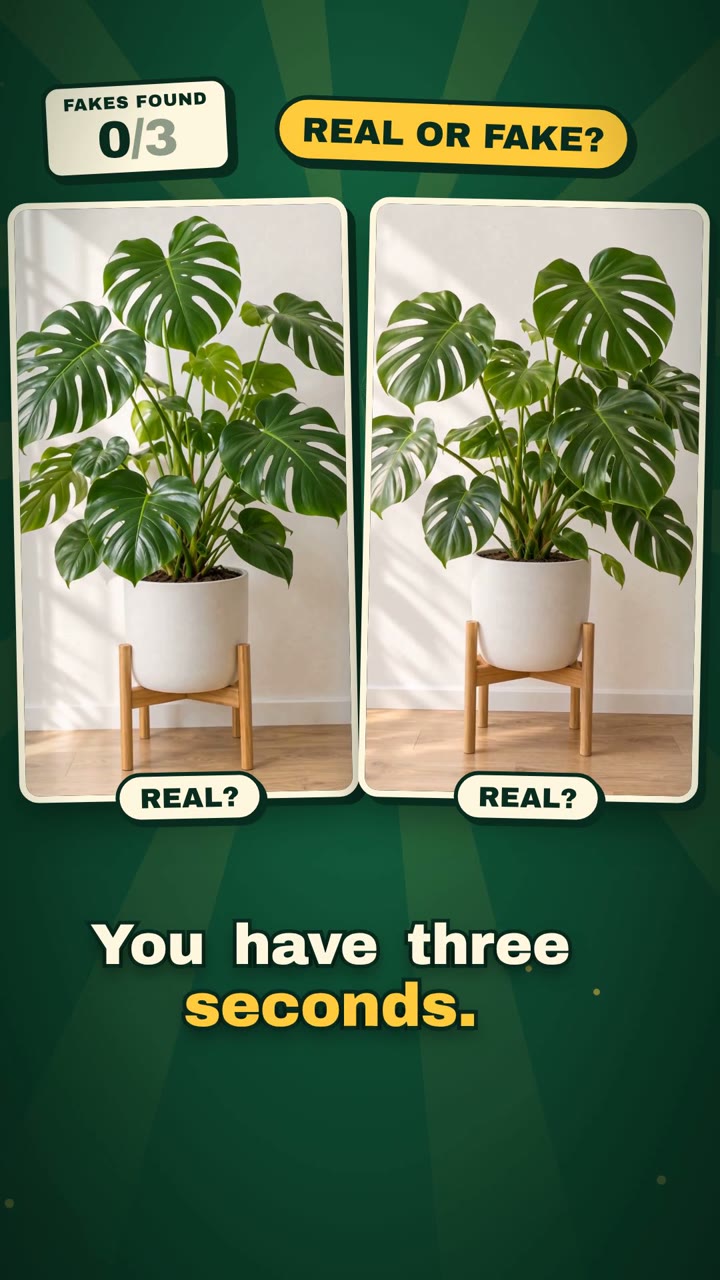
A game of real or fake, built from six photos, graphics and a voice.
 Made with ReelHatchReelHatch
Home decor · 30s
Fauxfrond faux plants
Prompt: A TikTok ad for Fauxfrond, a shop for realistic faux plants. Make it a guess game with no presenter: "Real or fake? You have 3 seconds." Three rounds, each showing two plants side by side with a countdown, then a stamp on the fake one.…
A good ad rarely stays in one kind for long. We measured what is on screen, second by second, in every ad on this site whose edit file we kept:
In the ones with a presenter, that person is on camera for about 46% of the ad. The rest is the product in use, a filmed scene or a graphic built for that ad. An avatar that talks for thirty seconds without a cut is the cheapest thing to generate, and the easiest to scroll past.
What AI video ads are good for, and what they are not
Good for
- Testing several angles on one product before you spend on any of them
- Products that need showing: how it folds, pours, cleans or looks on
- A second market: the same ad in another language
- Posting every week without filming every week
Not for
- Customer stories and testimonials: those need a real customer
- Results only a real person can show, such as a skin routine over six weeks
- Wide 16:9 films for television or a cinema screen
- Claims your own product page does not make
The honest summary: AI is very good at the ads you need many of, and has no business in the ads that depend on someone's real experience. Most advertisers need both, and the cheap one tells you what to spend the dear one on.
Three ways to get one made
| A human creator | A tool that makes the parts | A director that finishes the ad | |
|---|---|---|---|
| You get | A filmed video of a real person with your product | A talking presenter, clips, a voice: pieces to assemble | The finished ad, in one file |
| You do | Find the creator, write the brief, ship the product, ask for changes | Write the script, pick the actor, then edit | Write a sentence or two, and attach photos if you have them |
| It takes | About 2 to 10 days once the creator has the product | Minutes to generate, then your editing time | About 9 minutes |
| It costs | About $150 to $300 for one short video from a typical creator, plus 20% to 50% on top for paid-ad rights | A monthly plan; what one finished ad comes to depends on what you add | A price per video, on screen before you sign up |
| Choose it for | Real customer stories, and the angle you already know works | Large batches, and control over every cut | Testing angles, and ads you need today |
Sources: JoinBrands, How much do UGC creators charge? 2026 rate guide (August 15, 2026); Influee, UGC rates guide (April 18, 2025). Creator figures are ranges from two published rate guides, not quotes.
More on each road: how to hire UGC creators and what they charge; seven AI tools side by side; and what a director is, on the AI video agent page.
How to create AI video ads
With a director, the work is in the thinking, not the making. To create AI video ads that have a chance:
- Pick one viewer and one problem. "Owners of nervous dogs at bath time" makes a better ad than "pet owners".
- Decide what the camera can prove. A step being done, a before and an after, a screen. If nothing can be shown, the ad will be adjectives.
- Write the prompt and attach what is real. Your product photos, your screenshots, a link to your page. Real pictures beat imagined ones.
- Make it in more than one angle. The same product argued as a problem, as a demonstration and as an offer is three ads, and you cannot know in advance which one sells.
- Watch, change, label, post. Fix what is off in plain words, label the ad where the network requires it, and let the numbers pick the winner.
The same steps with every screen: how to make AI ads, step by step.
Where AI video ads run, and when to label them
A vertical 1080x1920 file runs on TikTok, Instagram Reels and Stories, Facebook and YouTube Shorts, as a post of your own or as a paid ad. A realistic AI presenter brings a duty with it on most of them:
| Where | Your own posts | Paid ads | With ReelHatch |
|---|---|---|---|
| TikTok | You must label AI-generated or significantly edited content that shows realistic-looking scenes or people. Unlabelled content may be removed, restricted or labelled by TikTok. | AI-generated content is one of the mandatory disclaimers: switch on "This ad contains AI-generated content" when you create the ad in TikTok Ads Manager. | Posts sent from ReelHatch carry the AI-generated label. Posting by hand, switch on TikTok's "AI-generated content" setting. |
| Instagram and Facebook | You must disclose, with Meta's AI disclosure tool, a post with photorealistic video or realistic-sounding audio that was digitally created or altered. Meta says it may apply penalties if you do not. | Meta requires the advertiser to disclose AI-made content in ads about social issues, elections or politics, and rejects such an ad when it is not disclosed. Its rules ask nothing of the advertiser for other ads: when it detects AI-generated content in an ad, it adds an "AI info" label itself. | Reels sent from ReelHatch carry the AI label. |
| YouTube and Shorts | You must disclose AI-generated or altered content that seems realistic, under "AI use" in YouTube Studio. Since May 2026 the label on Shorts sits on the video itself. Creators who consistently do not disclose risk a label applied for them, removal of content or suspension from the Partner Program. | Google requires a disclosure on election ads with synthetic content. For other ads it does not, but since July 2026 it lets advertisers add an AI label to a creative, and it notes that laws in the European Union, India and New York require one on some AI-made ads. | Shorts sent from ReelHatch are marked as altered or synthetic content. |
Sources: TikTok Community Guidelines, Integrity and Authenticity (effective September 24, 2026); About ad disclaimers in TikTok Ads Manager (updated September 2025); Meta Community Standards, Misinformation (read 16 November 2026); Meta Advertising Standards, ads about social issues, elections or politics (read 16 November 2026); YouTube Help, Disclosing use of altered or synthetic content (read 16 November 2026); YouTube, Updates to AI content disclosure and labels (May 27, 2026); Google Advertising Policies, Updates to AI labeling requirements (July 2026). The rules were read on these pages; they change, so check them before you post. This is general information, not legal advice.
How to judge one: what the best AI video ads do
The best AI video ads and the best filmed ones are good for the same reasons. Four things to look for, in the order they happen:
 0.2s
 6.5s
 14.5s
 27.0s
| When | What to look for | In the ads we measured |
|---|---|---|
| The first second | Something to look at: the product, the promise or a puzzle. Not a logo | The opening line is finished about 2.9 seconds in, but the picture is there from the first frame |
| The middle | Proof the camera can show, with a new shot every few seconds | 7 shots in a typical ad, a new one about every 3.3 seconds |
| Throughout | Few words, said plainly, and readable on screen | About 73 spoken words in a 30-second ad |
| The end | One offer and one thing to do | One closing line, and a card that repeats it |
For each of these in detail: 100 hooks for the first second, nine ads taken apart by the second, and script templates with the word counts.
AI video ads for business: who they suit
| If you run | What tends to work | Read next |
|---|---|---|
| An online shop | Your product photos, leading, with a presenter using the product | AI product video generator |
| A dropshipping store | Five angles on one product from its page or the supplier's photos | Dropshipping video ads |
| An app or software | Your real screens in a phone frame, each tap zoomed | Product URL to video |
| A local service | You on camera, from one photo, naming the town | AI commercial generator |
| An agency or a team | Many variants of one brief, tested against each other | Seven tools compared |
AI video ads for ecommerce are the plainest case, because the product can be photographed and the result measured in sales. They suit a service least when the whole sale rests on a customer's word, which is the one thing they must not invent.
What one costs with ReelHatch
Each video is priced by what it takes to make: its length, its shots, the voice and the music. The price of yours is on the composer's screen before you create an account, and a video that fails is never charged.
Every guide on this site
Tools
Compare