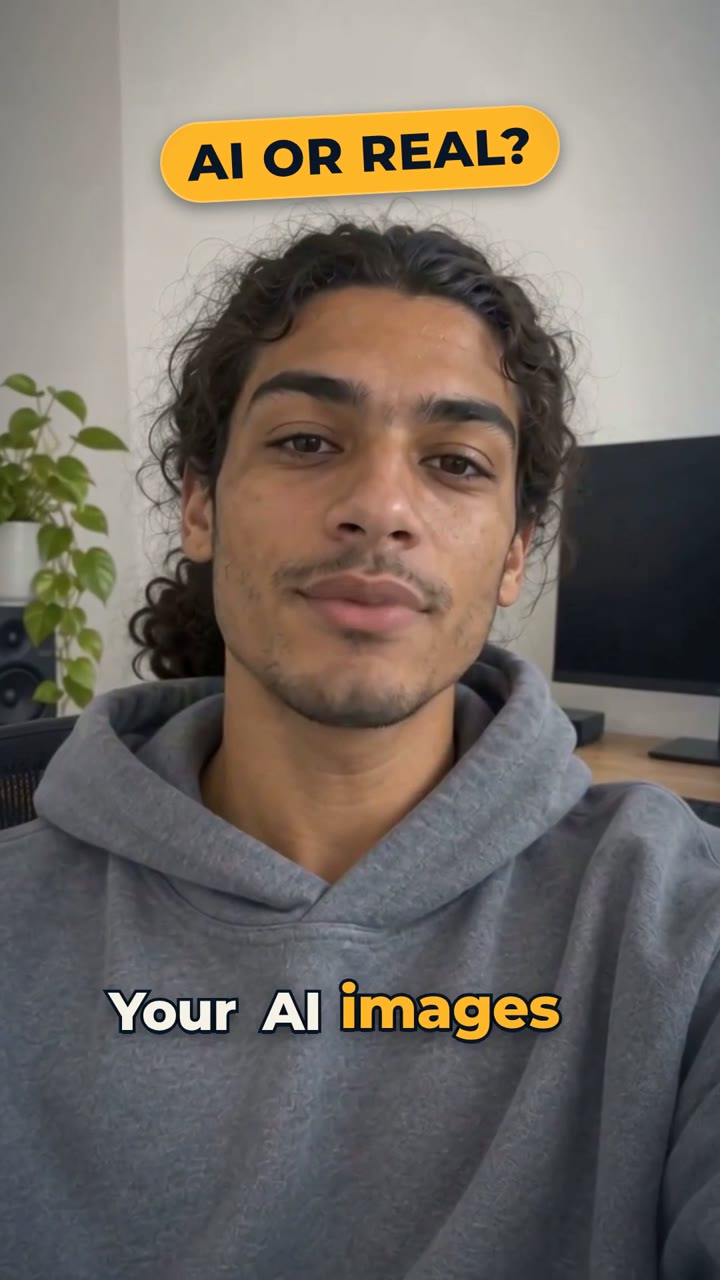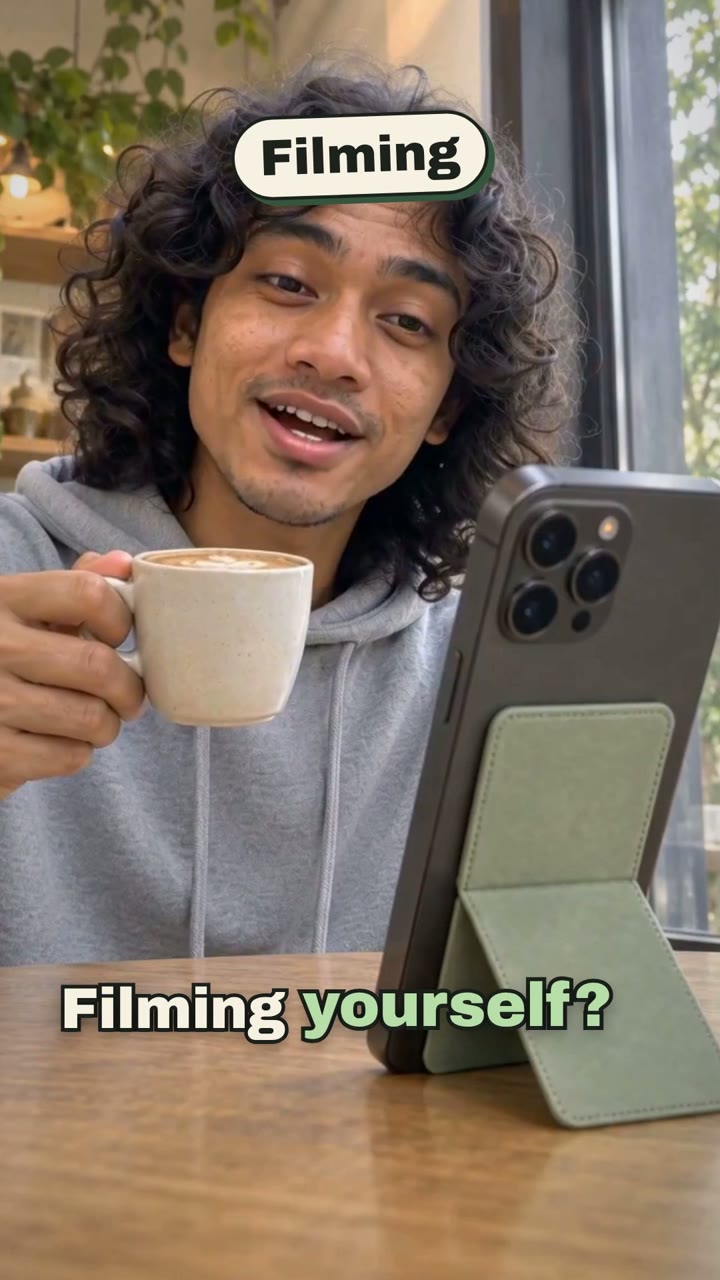
- 9:16 upright, 1080x1920: made for the phone screen
- 10 to 60 s the length you choose
- 1 photo is enough to put you in your own commercial
- About 9 min from your prompt to the finished commercial
A commercial for the phone, not for television
To most people the word "commercial" still means thirty seconds between two halves of a programme. The commercials a small business can afford to run today are watched on a phone, held upright, in between other people's videos. That changes the shape, the length and the way the space is bought.
| Television spot | Phone commercial | |
|---|---|---|
| Shape | Wide, 16:9 | Upright, 9:16 (1080x1920) |
| Length | Sold in fixed slots, commonly 15, 30 or 60 seconds | Whatever the message needs; ReelHatch makes 10 to 60 seconds |
| Where it runs | Broadcast and streaming channels | TikTok, Instagram Reels and Stories, YouTube Shorts |
| How you get the space | Airtime booked through a station or an agency | You post it yourself, or pay to show it from your own ad account |
| Does ReelHatch make it? | No | Yes: this is all it does |
So this AI commercial maker makes one thing, the upright commercial. It is an AI commercial video generator for phones: it does not make a wide spot for television or the cinema, and nothing on this page should leave you thinking it does.
What every commercial needs
Take any commercial that worked apart and you find the same four pieces: an opening that tells the right viewer it is meant for them, proof they can see, what they get, and one thing to do next. Here is a real one cut into those four. It is the window-cleaning commercial at the top of this page, and the lines are its own, word for word.
The opening0 to 2.6s
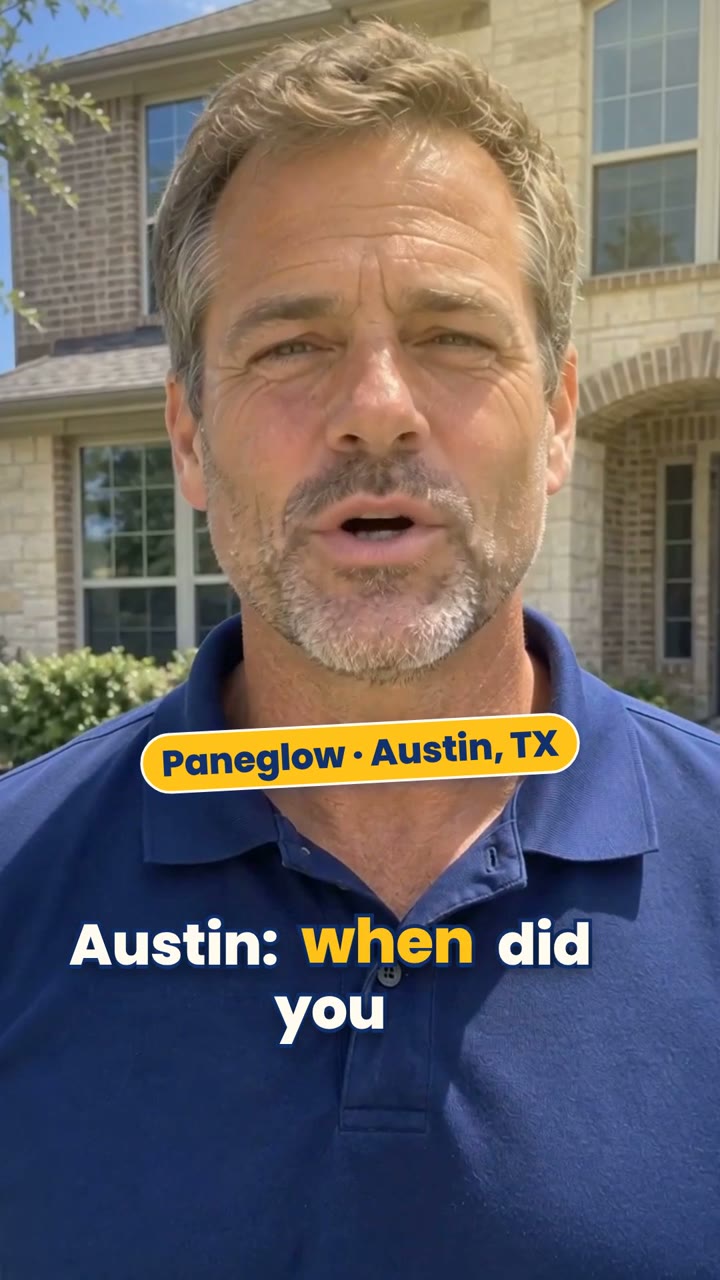
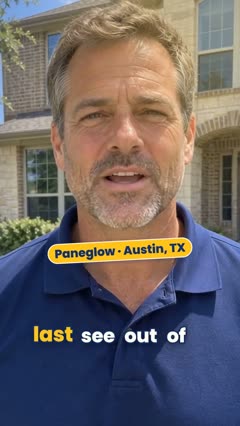
The owner looks into the camera and names the city, so a viewer in Austin knows at once that this is local and meant for them. A small label under his face carries the business name and the town.
Said, 0.0s: "Austin: when did you last see out of your windows?"
The proof2.6 to 11.5s
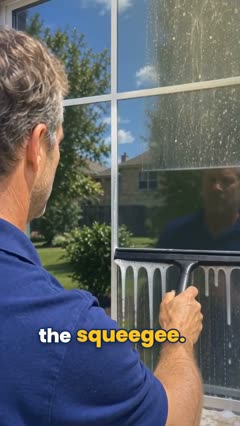
One pass of the squeegee, filmed over his shoulder, then the same window split down the middle with BEFORE on one side and AFTER on the other. The claim is shown before it is explained.
Said, 2.6s: "Hey, neighbor, I'm the owner of Paneglow. Watch one pass of the squeegee. Half the grime, gone. Now that's clean glass. Let that Austin sunshine right on in."
What you get11.5 to 17.2s
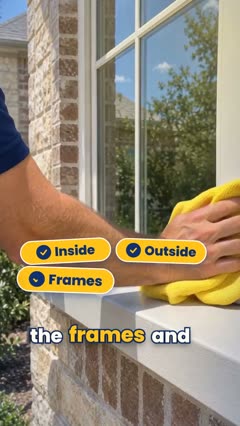
Four ticks appear on screen as he says them: inside, outside, frames, sills. The list can be read as well as heard.
Said, 11.5s: "We do the inside, the outside, the frames and the sills. Every pane, start to finish."
The offer and the ask17.2 to 27.6s
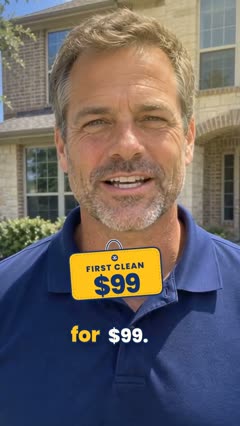
How quick it is to book, then a price tag with the first-clean price and a deadline, and an end card with the name and the one thing to do: book this week.
Said, 17.2s: "And booking takes about a minute, online. Easy as sweet tea, neighbor."
Said, 21.0s: "Book this week and get the first clean for $99."
You do not write any of that. The prompt for this commercial named the business and the town, said who presents, gave the opening line, what to show and the offer. The director chose the split screen, the four ticks, the price tag and the order they come in.
Three AI commercials, three kinds of business
AI commercials do not have to look alike. These three were made for businesses with nothing in common, and each one sells a different way: on a face you can trust, on the product itself, on a challenge.
A local service
The owner on camera, from one photo of him. It sells on trust and a first-visit price.
 Made with ReelHatchReelHatch
Local service · 30s
Paneglow window cleaning
Prompt: An ad for Paneglow, a window cleaning service for homes in Austin, Texas. The presenter is the owner in the attached photo, standing in front of a house with tall windows; he speaks with a friendly Texas drawl. He opens with "Austin: when did you…
A product
A cold brew bottle from its product photo. It sells on the pour and three ways to drink it.
 Made with ReelHatchReelHatch
Coffee brand · 30s
Lumabrew cold brew
Prompt: A TikTok ad for Lumabrew, a small-batch cold brew concentrate, shown in the attached product photo. Hook: the concentrate pouring over ice, close up. The presenter, a host in a bright morning kitchen, says "Cafe-style cold brew at home, ready in seconds" and shows three…
An app
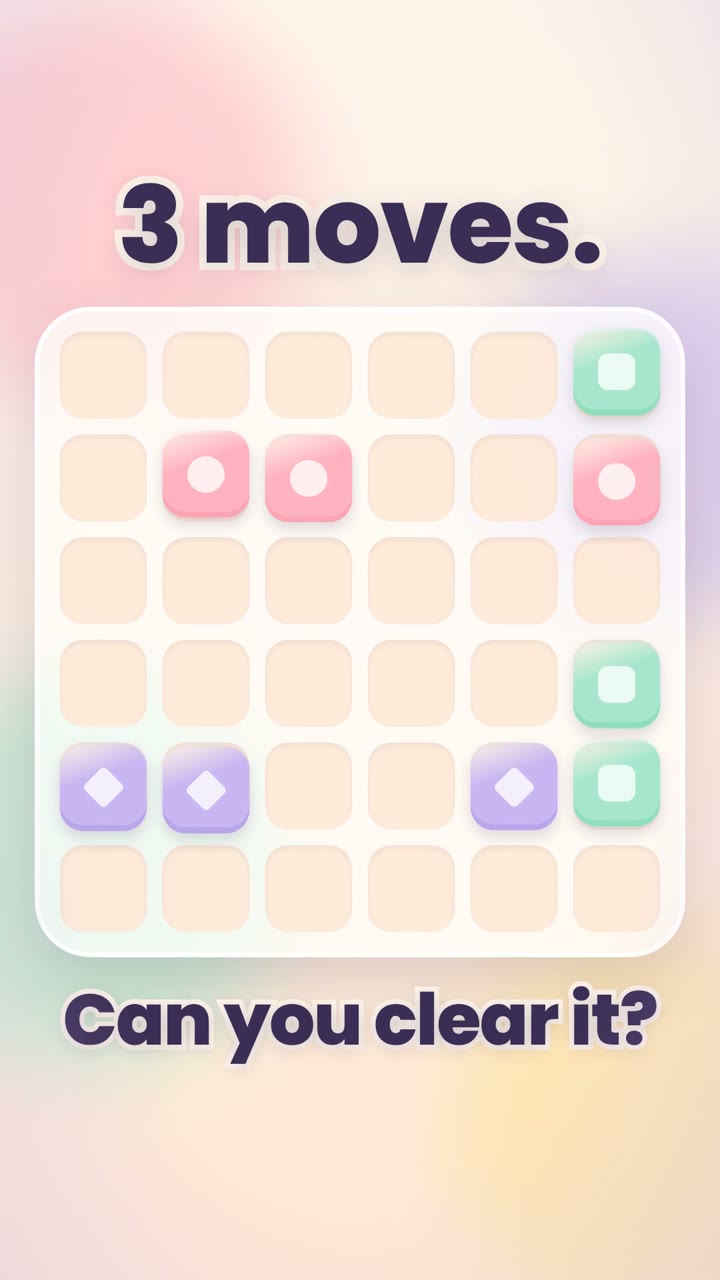
A puzzle game with no presenter and no voice. It sells on a challenge.
 Made with ReelHatchReelHatch
Mobile game · 30s
Gridglade puzzle game
Prompt: An ad for Gridglade, a relaxing tile-matching puzzle game for phones. No presenter and no voice: only music, the game drawn as animated graphics and big words on screen. Open with "3 moves. Can you clear it?" over a nearly finished board, show the three…
Each tile opens the full commercial with the exact prompt that made it. Below are the same three prompts with the names taken out, so you can fill in your own. Words in [square brackets] are yours to replace.
An ad for [business name], a [service] for [who] in [town]. The presenter is the owner in the attached photo, standing [where]; they speak in a friendly, local voice. Open with "[Town]: [a question about the problem]?" Show [the job half done, then finished]. Say what is included: [three or four things]. End with the offer: "[first-visit price or deadline]".
Attach one clear photo of the person who presents, with their agreement.
A TikTok ad for [product], [what it is in a few words], shown in the attached product photo. Hook: [the product in use, close up]. The presenter, a host in [a place your buyer knows], says "[your one-line promise]" and shows [three ways to use it] as a numbered list on screen. CTA: "[your offer]." Upbeat music, cuts on the beat.
Attach one product photo. Two or three from different sides are better.
An ad for [app name], [what it does] for [who]. No presenter and no voice: only music, the app drawn as animated graphics and big words on screen. Open with "[a challenge or a question]" over [the screen that shows it]. Follow with three short lines, one at a time: "[benefit]." "[benefit]." "[benefit]." CTA: "[what to do next]".
Nothing to attach. Add screenshots if you want your real screens in it.
How to make an AI commercial in four steps
- Write the offer down first. One business, one kind of customer, one reason to act this week: a first-visit price, a deadline, free delivery. A commercial with three offers sells none of them.
- Decide who presents. You, from a photo. A presenter cast for this commercial. Or nobody: graphics, your pictures and big words.
- Type the prompt and attach what you have. Say who you are, who it is for and the offer. Add the opening line if you already know it. Pick a length: 15 seconds carries one offer, 30 leaves room to show the job being done.
- Watch it, then fix what is off. For 72 hours you can tell the director what to change in plain words ("say the price sooner", "show the van"). Then post it or download the file.
Be in your own commercial
People choose a local business because they trust the person who turns up. That is hard to borrow from a hired face and easy to show with your own. Attach one photo of yourself and the director films the whole commercial with you presenting: talking to the camera with your lips in sync, and doing the job between the lines, in a voice designed to suit you.
 Presenter photo
 1.0s
 6.0s
 14.0s
 23.0s
Two rules come with it. The photo must be of someone who has agreed to appear, and you confirm that when you attach it. And the voice is designed for the commercial, not copied from yours, so say in the prompt how it should sound. "A friendly Texas drawl" was all this one needed.
What it will not do
It will
- Put you, your founder or a presenter cast for the job on camera
- Say your real offer, your price and your deadline
- Show your real product or your real screens from the pictures you attach
- Write and speak in English or one of 7 other languages
It will not
- Put a celebrity, or anyone who has not agreed, on camera
- Invent a customer, a review or a result
- Make a wide 16:9 spot for television or the cinema
- Promise more than your prompt and your own pages do
The presenter is a host, never a pretend customer. It can say what the business does and what the offer is. It will not say "I tried this and it changed my life", because nobody did. If you have real customers who will say that on camera, film them: that is the one kind of commercial only a person can make, and our page on what creators charge says what it costs.
What a commercial costs
Each commercial is priced by what it takes to make: its length, its shots, the voice and the music. The price of yours is on the composer's screen before you create an account, and a video that fails is never charged.